The more you downwind, the more you begin to get a good feel for how good or bad the conditions will be based on the forecasts, what kind of foil you need to use for different conditions and can normally make the right call pretty easily. But what about those getting into the sport? In this blog I'm going to try and touch on the tools I use(d) to understand how the forecast and actual wind translates to the bumps that are out there and in turn how I then cho(o)se my foils.
First off, early on in your downwind journey - the foil choice is easy. Stay consistent, use a bigger foil that covers 80% of your conditions, even if it is too slow sometimes, you can always move to another bump (If it keeps you on foil for longer, that's better), and will ensure you have a high likelihood of paddling up and staying on foil. Consistency will also help you dial in the foil, and most importantly will be a familiar (constant) feel. This means that when the wind is weak or strong, you develop a feel of how the bumps vary because you have the same foil. If you keep changing foil trying to chase the same amount of 'lift feel' for the moments you are on foil, you'll never truly appreciate the significance of different wind strengths and the resulting bumps. Additionally, it's really good to learn to foil over foiled and under foiled - as it's not uncommon that conditions vary over the course of a run.
Understanding Fetch
The first thing to do when looking at possible run options to understand how good the bumps will be is to look at the fetch.

Check water depth
In addition to fetch, wind strength and duration. Water depth is an important consideration when looking at runs. Deeper water in general leads to bumps with more energy (but they move faster) and as water gets shallower bumps slow down as they are influenced by the bottom of the ocean / sea / lake (but that and other depth effects are for another deep dive). Shallower water (lakes often) tends to lead to smaller, shorter period and lower energy bumps.
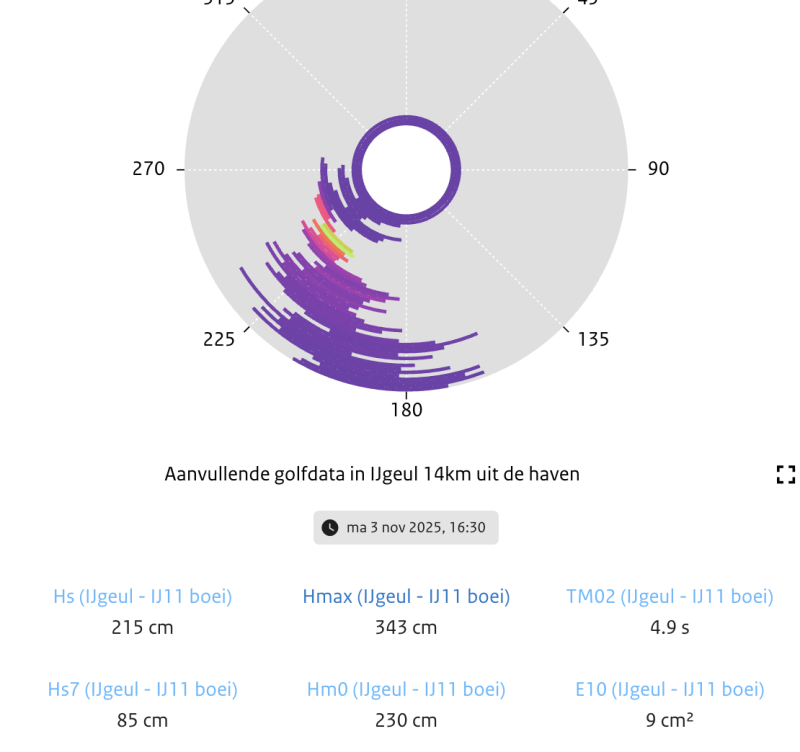
If you have buoy data, or look at wind / swell forecasts (such as on Windy - "Wave & Tide") you will often get the windswell that is also forecast as a result of the wind. It's always good to note the size of the bumps / swell that results from different wind strengths and is also useful to compare against the different foils, especially if you have buoy data like ours in The Netherlands that even gives you the bump energy.

Most importantly - Take notes
There is no hard science to build a "foil selector" simply based on weight, wind / bump energy and foil size. I've tried using ChatGPT, using GPX data and weather data, to build a race foil selector - It's impressively accurate, however it relies on my input data using foils I've used and the conditions I've used it in. So this is hugely linked to my skill level and which foils I can ride in certain conditions.
What I'm trying to say is that foil choice is not: X knots = Y foil just based on numbers, but based on what you've experienced as successful and what you've struggled with (and why, understanding the why is critical). So how to you track this? Easy, write this all down in a simple log (run, wind strength and direction, board used, foil used, duration, then notes such as number of paddle ups or anything of note that went well or didn't go well etc.). This way you have easy reference material to see which foils work well for you in certain conditions and which didn't. It's also nice to see progress as maybe one day you do manage to ride a foil in certain conditions, where you had a shocker the last time. But I must emphasise, I think that the key to getting better is to really understand why bad runs were bad. Knowing what you did wrong, why a certain foil wasn't the right call or understanding why the conditions were difficult is how you get better.
As always, if you have any questions, comments or feedback - reach out, either via instagram or the contact form on this site!